Have you noticed that your swimming pool needs more water than usual?
Some water loss is completely normal. Pools naturally lose water through evaporation, splashing and normal use.
But if the water level continues dropping noticeably—or you find yourself frequently reaching for the garden hose—you may be dealing with something more than evaporation.
A swimming pool leak can develop in plumbing, equipment, fittings or the pool structure itself, and finding the source isn’t always easy.
This guide explains the most common signs of a pool leak, what homeowners can check themselves and when it’s time to request professional pool leak detection in Vancouver.
How Much Water Loss Is Normal?
Every outdoor swimming pool loses some water.
The amount changes depending on:
- Air temperature
- Water temperature
- Humidity
- Wind
- Sun exposure
- Pool usage
- Whether the pool is covered
Because these conditions constantly change, there isn’t one exact amount of evaporation that applies to every pool.
The more useful question is:
Has your pool started losing noticeably more water than it normally does?
A sudden change in your pool’s usual behaviour deserves attention.
Signs Your Pool May Have a Leak
1. You’re Adding Water More Often
This is usually the first sign homeowners notice.
If you suddenly need to top up the pool far more frequently than before, don’t automatically assume warmer weather is responsible.
Monitor the water level over several days.
Consistent or unusual water loss may indicate a leak.
2. The Water Level Drops Even When the Pool Isn’t Being Used
Splash-out from swimmers can cause water loss.
But if your pool continues losing water during periods when nobody is swimming, another cause may be responsible.
This is particularly worth investigating if the drop is consistent.
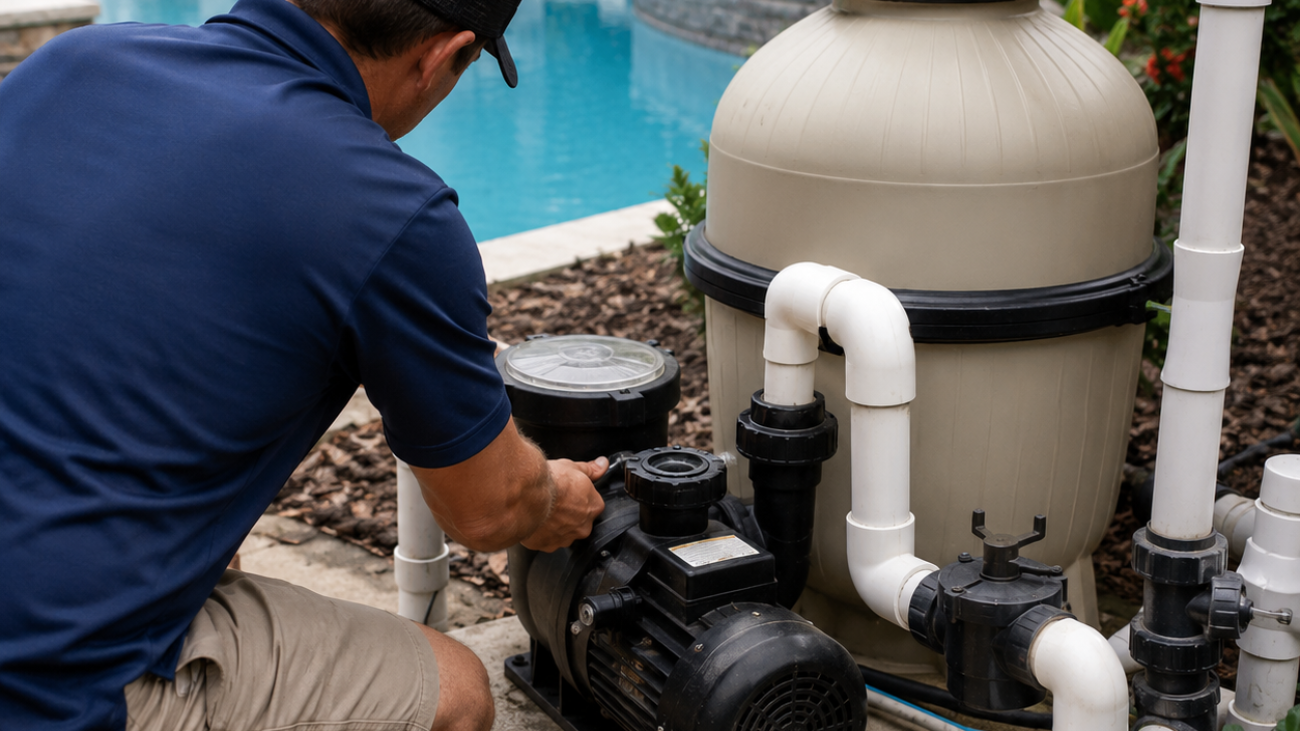
3. You Notice Water Around Pool Equipment
Inspect your equipment area.
Look around:
- Pool pump
- Filter
- Heater
- Valves
- PVC connections
- Unions
- Other fittings
A slow equipment leak may only be visible while the circulation system is operating.
Look for:
- Dripping water
- Damp concrete
- Mineral deposits
- Rust or corrosion
- Water marks
Even a small leak should be investigated before it becomes worse.
4. Air Is Entering the Pump
If you see persistent air bubbles inside the pump basket or returning to the pool, air may be entering the circulation system.
There are multiple possible causes, and not every air bubble means there is a leak.
However, when air in the system appears alongside unexplained water loss, professional inspection can help determine what’s happening.
5. You Notice Unexplained Wet Areas Around the Pool
Pools naturally create wet areas through swimming and cleaning.
But persistent dampness when nobody has recently used the pool can be worth investigating.
Pay attention to unusual moisture around:
- Pool equipment
- Surrounding landscaping
- Pool decks
- Plumbing routes
The visible wet area may not necessarily be directly beside the source of the leak, which is one reason pool leaks can be difficult to locate.
6. Water Chemistry Becomes Difficult to Maintain
A leaking pool doesn’t only lose water.
It also loses treated water and the chemicals dissolved within it.
As fresh water is repeatedly added, chemical levels may become more difficult to maintain.
If your pool suddenly requires more frequent chemical adjustment at the same time you’re noticing water loss, the two symptoms may be related.
7. Your Automatic Filler Seems to Run Constantly
An automatic pool-filling system can hide leaks.
Instead of seeing the water level fall, homeowners may simply notice increased water usage.
If an automatic fill system appears to be operating significantly more than normal, check whether the pool is losing water.
Pool Leak or Evaporation?
Before assuming the pool is leaking, homeowners can perform a simple preliminary comparison sometimes referred to as a bucket test.
The basic idea is to compare water loss inside a container with water loss from the pool under similar outdoor conditions.
If the pool’s level drops noticeably more than the water in the container, further leak investigation may be appropriate.
While a basic test can indicate that abnormal water loss may be occurring, it doesn’t tell you where the leak is located.
That’s where professional leak detection becomes valuable.
Where Do Swimming Pools Commonly Leak?
Pools contain many components capable of developing leaks.
Possible locations include:
Pool Equipment
Leaks may occur around:
- Pumps
- Filters
- Heaters
- Valves
- Connections
- Seals
- Unions
Equipment leaks can sometimes be relatively easy to identify because water is visible around the equipment pad.
Underground Plumbing
Pool plumbing carries water between the pool and equipment.
Leaks within underground plumbing can be much more difficult to locate because there may be no obvious visible water.
Skimmers and Returns
Skimmers, return fittings and their connections can develop problems over time.
Pool Lights and Other Fittings
Any fitting that penetrates the pool structure is another area that may require investigation.
Pool Shell or Liner
Depending on pool construction, water loss can also originate from cracks, damaged surfaces or liner problems.
Why Pool Leaks Shouldn’t Be Ignored
A small leak can seem like a minor inconvenience.
You add some water every few days and the pool continues operating.
But allowing a leak to continue can create additional problems.
Higher Water Consumption
Constantly replacing lost water increases unnecessary water usage.
More Chemical Use
Every time treated water escapes and fresh water is added, the pool chemistry changes.
This can result in greater chemical usage and more frequent adjustment.
Equipment Performance Problems
Certain leaks can affect circulation or allow air into the system.
Potential Property Damage
Depending on the location of the leak, escaping water may affect surrounding areas.
Larger Repairs Later
Leaks rarely repair themselves.
Addressing the issue earlier may help prevent a relatively manageable problem from becoming more complicated.
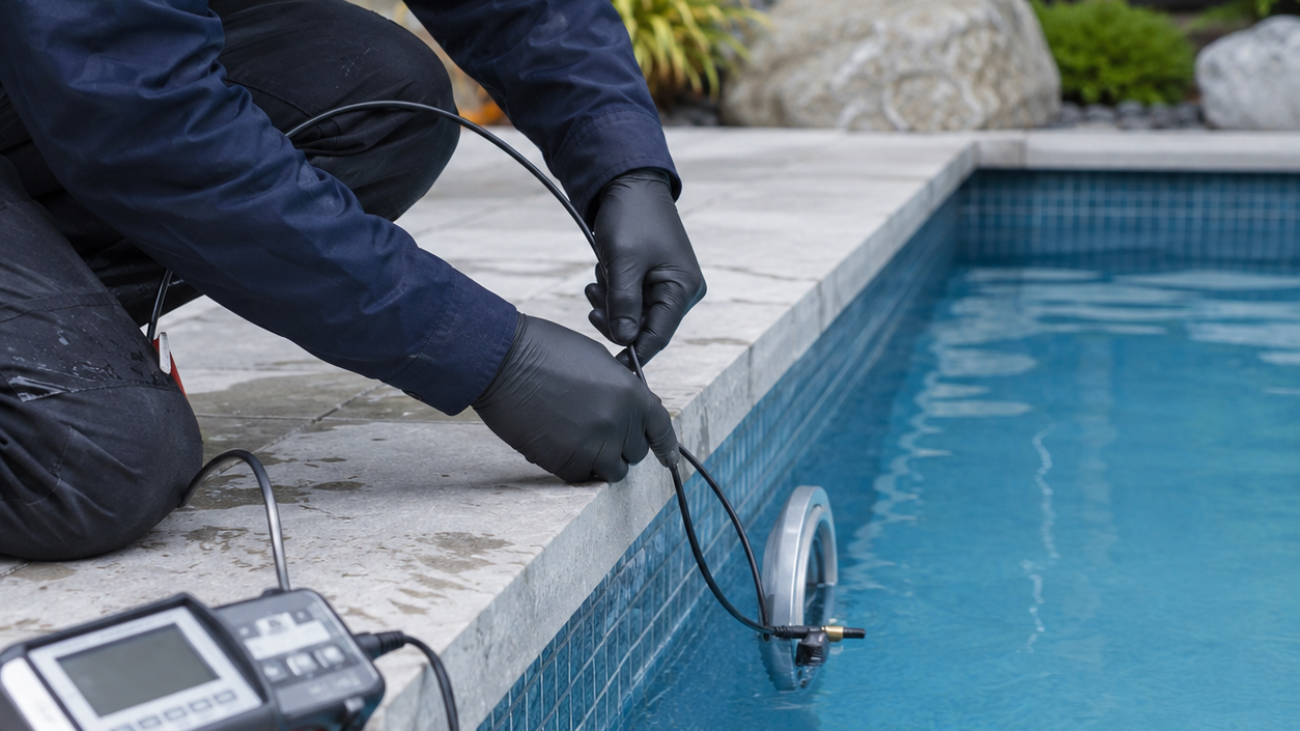
How Professional Pool Leak Detection Works
Leak detection usually begins by understanding how and when the pool loses water.
A technician may ask questions such as:
- How quickly is the water level falling?
- Does water loss change when the pump is running?
- When did the problem begin?
- Has any equipment recently been repaired?
- Are there visible leaks near equipment?
- Have you noticed air in the circulation system?
The pool and equipment can then be inspected systematically to narrow down potential causes.
The objective is not simply to confirm that the pool is leaking.
The real goal is to identify the source as accurately as possible before repairs begin.
Why Accurate Leak Detection Matters
Pool systems can contain plumbing hidden underground or behind finished surfaces.
Guessing where a leak exists can lead to unnecessary repairs, additional labour and potentially unnecessary disruption around the pool.
A systematic diagnostic process allows repair work to focus on the most likely source of the problem.
That’s why professional leak detection is different from simply looking around the pool for water.
Can a Pool Leak Be Repaired?
In many situations, yes.
The type of repair depends entirely on the source of the leak.
Repairs may involve:
- Replacing seals or fittings
- Repairing equipment connections
- Correcting plumbing problems
- Repairing damaged components
- Addressing pool-surface issues
The important first step is determining exactly where the water is escaping.
Preventing Future Pool Problems
Not every leak can be prevented, but regular pool maintenance gives technicians an opportunity to notice problems earlier.
Routine service can help identify:
- Small equipment leaks
- Deteriorating fittings
- Unusual pump behaviour
- Changes in circulation
- Water-level inconsistencies
- Equipment requiring service
Preventive maintenance doesn’t eliminate the possibility of future repairs, but it can reduce the chances of problems going unnoticed for long periods.
Pool Leak Detection in Vancouver
If your swimming pool is losing more water than expected, don’t keep adding water indefinitely without finding out why.
Sunrise Pool Maintenance & Repair can help investigate pool water loss and determine whether professional repair is required.
We provide professional pool maintenance, troubleshooting and repair solutions for homeowners in the Vancouver area.
Think Your Pool May Be Leaking?
Contact Sunrise Pool Maintenance & Repair to schedule an inspection and get to the source of your pool water-loss problem.
Frequently Asked Questions
How can I tell if my pool is leaking or evaporating?
Monitor the pool’s water level and compare it with normal conditions. A bucket-style comparison test can also help indicate whether the pool is losing more water than expected from evaporation.
Why does my pool lose water when the pump is running?
Water loss that changes depending on whether equipment is operating may provide useful information about where a leak is located. A technician can inspect the circulation and equipment system to investigate further.
Can a pool leak increase chemical costs?
Yes. When treated water escapes, fresh replacement water changes the pool’s chemistry and may require additional chemical adjustment.
Should I keep adding water to a leaking pool?
Maintaining an appropriate water level may be necessary for equipment operation, but continuously adding water does not solve the underlying problem. The cause of ongoing water loss should be investigated.
Does Sunrise Pool provide leak detection in Vancouver?
Sunrise Pool Maintenance & Repair provides pool troubleshooting, maintenance and repair services in the Vancouver area. Contact us to discuss suspected water loss and arrange an inspection.