Swimming pools are designed to circulate, filter and treat thousands of litres of water every day. When everything is operating correctly, you may barely think about the equipment working behind the scenes.
But when something goes wrong, small changes can quickly become noticeable.
Maybe the pump suddenly sounds different. Perhaps the heater isn’t reaching the desired temperature. You may notice weaker circulation, cloudy water or a water level that seems to drop faster than usual.
Knowing when to call for professional pool repair in Vancouver can help prevent a small problem from becoming a much larger and more expensive one.
Here are eight warning signs pool owners shouldn’t ignore.
1. Your Pool Pump Is Making Unusual Noises
A pool pump normally produces a consistent operating sound.
If you suddenly hear:
- Grinding
- Screeching
- Rattling
- Humming
- Excessive vibration
- A noticeably louder motor
something may need attention.
Possible issues can range from debris and restricted water flow to worn internal components or motor problems.
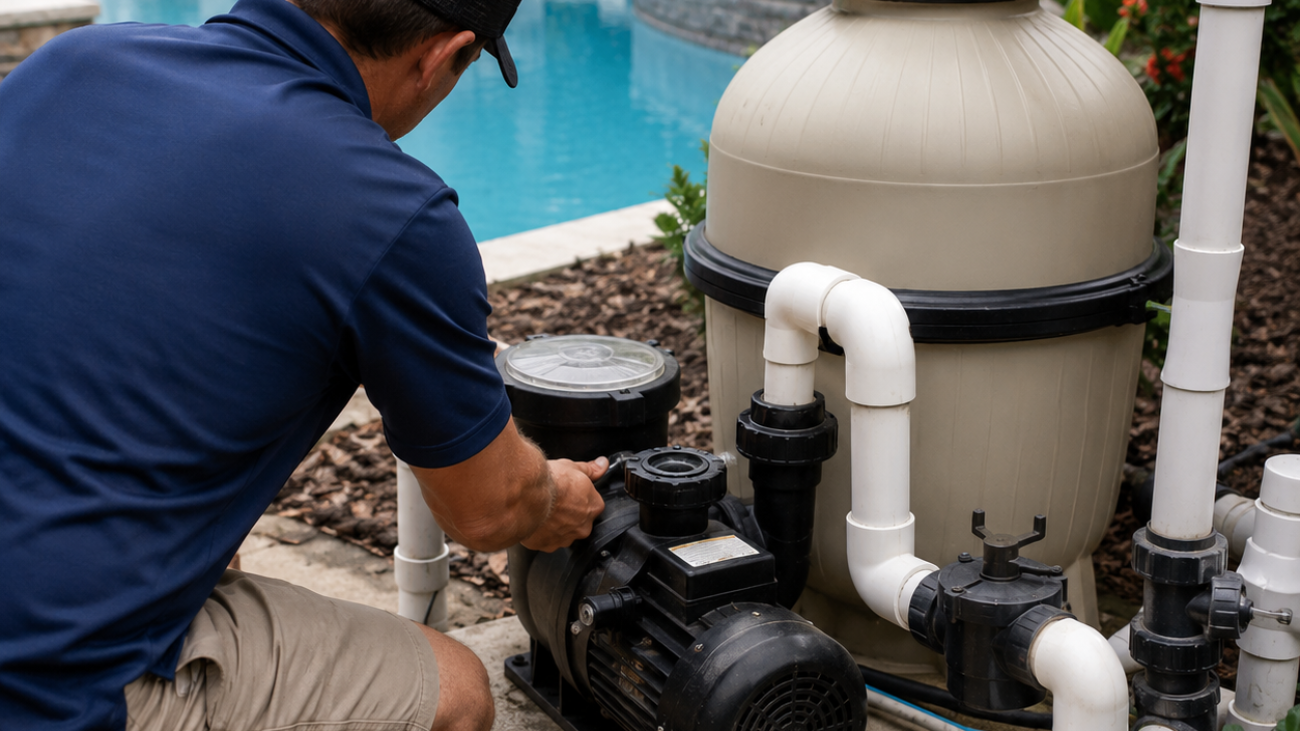
A pump is one of the most important parts of your pool system because it keeps water circulating through the filter, heater and sanitation equipment.
Continuing to operate a pump that is clearly struggling may lead to additional damage.
If your pump suddenly sounds different, having it inspected early is usually better than waiting for complete failure.
2. Water Isn’t Circulating Properly
Stand near your pool returns while the system is running.
Does the water flow seem weaker than usual?
Poor circulation can make it difficult for your pool to properly filter water and distribute sanitizer.
Potential causes can include:
- Clogged baskets
- Dirty filters
- Blocked plumbing
- Low water levels
- Air entering the system
- Valve problems
- Pump issues
Weak circulation can eventually contribute to cloudy water or algae because the filtration and sanitation systems cannot operate effectively.
A professional pool technician can inspect the circulation system and identify where the restriction or equipment problem is occurring.
3. Your Pool Water Keeps Turning Cloudy
Cloudy water isn’t always a simple cleaning problem.
If you’ve cleaned the pool and adjusted the water chemistry but clarity continues to deteriorate, there may be an underlying filtration or circulation issue.
Possible causes include:
- Poor filtration
- Inadequate circulation
- A dirty or damaged filter
- Chemical imbalance
- Excess contaminants
- Equipment that is not running long enough
- Pump performance problems
Instead of repeatedly adding chemicals, it’s often better to determine why the pool isn’t staying clear.
Professional diagnosis can help distinguish a water chemistry issue from a mechanical problem.
4. Your Pool Heater Isn’t Heating Properly
A pool heater can make a major difference in Vancouver, where homeowners often want to extend the comfortable swimming season beyond the hottest weeks of summer.
Common heater symptoms include:
- Heater won’t start
- Water isn’t reaching the desired temperature
- Heater repeatedly shuts down
- Error messages appear
- Heating takes significantly longer than normal
- Unusual sounds occur during operation
Heater issues can involve several components and should generally be diagnosed by someone familiar with pool equipment.
Because heating systems may involve electricity or gas, attempting random repairs without appropriate knowledge is not recommended.
5. You’re Constantly Adding Water to the Pool
Every swimming pool naturally loses some water through evaporation and splash-out.
However, repeatedly adding a significant amount of water may indicate a leak.
Possible leak locations include:
- Pool plumbing
- Equipment connections
- Pumps
- Filters
- Heaters
- Valves
- Pool fittings
- Skimmers
- The pool shell or liner
Leaks shouldn’t be ignored.
Beyond wasting water, a continuing leak can potentially affect surrounding areas or place additional stress on the pool system.
If your pool level is dropping noticeably faster than expected, professional leak investigation may be appropriate.
6. You See Water Around Your Pool Equipment
The equipment area should not normally have unexplained water accumulating around it.
Check periodically around:
- Pumps
- Filters
- Heaters
- Plumbing connections
- Valves
- Unions
Small drips may seem harmless but can worsen over time.
Leaks can also expose equipment to moisture and make it more difficult to determine where water loss is actually occurring.
Finding and addressing equipment leaks early can help prevent more complicated repairs.
7. Your Filter Pressure Has Changed
Your pool’s pressure gauge provides useful information about what’s happening inside the filtration system.
A pressure reading that is noticeably higher or lower than your pool’s normal operating range can indicate a problem.
High pressure can sometimes suggest restricted flow through the filter.
Unexpectedly low pressure may point toward circulation problems elsewhere in the system.
Because every pool configuration is different, the important thing is understanding your system’s normal operating behaviour and noticing when it changes.
8. Your Pool Equipment Keeps Turning On and Off
Equipment that repeatedly cycles, unexpectedly shuts down or fails to follow its normal schedule may require professional diagnosis.
This can affect:
- Pumps
- Heaters
- Automation systems
- Sanitization equipment
Intermittent problems can be particularly frustrating because the system may work normally during one inspection and fail later.
Tracking when the problem occurs and noting any error messages can help a technician diagnose the issue more efficiently.
Repair or Replace: Which Is Better?
One of the most common questions homeowners have is whether damaged pool equipment should be repaired or replaced.
There is no single answer.
A technician may consider:
- Age of the equipment
- Type of failure
- Availability of replacement parts
- Cost of repair
- Efficiency of the existing equipment
- Condition of surrounding components
- Frequency of previous repairs
Repairing a relatively new pump with a straightforward problem may make perfect sense.
Repeatedly repairing older equipment approaching the end of its useful life may not.
A professional assessment can help determine which option offers better long-term value.
Why Preventive Pool Maintenance Can Reduce Repairs
Many emergency pool repairs begin as smaller problems.
During routine maintenance, a technician may notice changes such as:
- Unusual pump noise
- Small leaks
- Filter pressure changes
- Reduced circulation
- Heater performance issues
- Damaged fittings
- Developing water-quality problems
Catching these issues early can often reduce the chance of unexpected equipment failure during the swimming season.
This is one reason professional maintenance and professional repair work together.
Maintenance helps identify problems.
Repair corrects them before they become worse.
Don’t Ignore Small Pool Leaks
Small leaks deserve special attention because they may remain unnoticed for weeks.
A homeowner may simply assume additional water is being lost through evaporation.
Meanwhile, the leak may slowly become larger.
Warning signs can include:
- Falling water level
- Wet areas around equipment
- Air entering the pump
- Difficulty maintaining water chemistry
- Increased water usage
- Damp areas around the pool
If you suspect a leak, having the pool inspected can help determine whether water loss is normal or requires repair.
Why Professional Diagnosis Matters
Modern pools may include interconnected:
- Pumps
- Filters
- Heaters
- Salt systems
- Automation
- Plumbing
- Valves
- Lighting
- Water features
A symptom in one component may actually originate somewhere else.
For example, weak return flow doesn’t automatically mean the pump needs replacement.
The actual problem might involve a clogged filter, blocked line, valve position or another circulation issue.
Good pool repair begins with accurate diagnosis.
Professional Pool Repair in Vancouver
When your pool isn’t performing the way it should, guessing at the problem can waste both time and money.
Sunrise Pool Maintenance & Repair provides professional pool troubleshooting, maintenance and repair services in the Vancouver area.
Whether you’re dealing with circulation problems, equipment issues, leaks or an unexpected pool problem, we can inspect the system and help determine the appropriate solution.
Need Pool Repair?
Don’t wait until a small pool problem becomes a major repair.
Contact Sunrise Pool Maintenance & Repair to request pool service or repair in Vancouver and surrounding areas.
Frequently Asked Questions
How do I know if my pool pump needs repair?
Unusual sounds, weak circulation, leaking water, difficulty starting or unexpected shutdowns can all indicate that the pump should be inspected.
Why isn’t my pool heater working?
Pool heaters may stop operating for many reasons, including water-flow problems, control issues or problems within the heater itself. Professional diagnosis is recommended.
Should I repair or replace my pool equipment?
It depends on equipment age, condition, repair cost and the type of failure. A professional technician can help compare the long-term value of repair versus replacement.
Why is there air in my pool pump?
Air entering the circulation system may indicate an issue somewhere on the suction side of the system, low water level or another problem requiring investigation.
Who provides pool repair in Vancouver?
Sunrise Pool Maintenance & Repair provides professional pool maintenance, troubleshooting and repair services for customers in the Vancouver area.